The word has changed shape over the last decade. It used to belong to clinical literature; now it turns up in ordinary conversation as a verdict — an ex-partner, a boss, a mother, someone who cut you off in traffic. It has become one of the few psychological terms that functions primarily as an insult, and it does that job so efficiently that we have almost stopped asking what it was originally meant to describe. I find that a loss, and not only for reasons of terminological tidiness. The concept, when you follow it back to where it started, turns out to be describing something much closer to home than most of us would like.
It began as a description of everyone
When Freud introduced the term into psychoanalytic thinking in 1914, he was not describing a disorder. He was describing an ordinary stage of development — the infant’s relationship with itself before it has properly discovered that other people exist as separate beings with their own interiors. Narcissism, in that original sense, is not a deviation. It is where all of us begin.
A few years later, it was Paul Federn who first used the phrase ‘healthy narcissism’, and despite sounding like a contradiction, the phrase still does useful work. What he actually meant was that you should have an adequate level of self-regard, based on a realistic view of your abilities. Not inflation. Nor is it humility. Just a healthy relationship with your own worth.
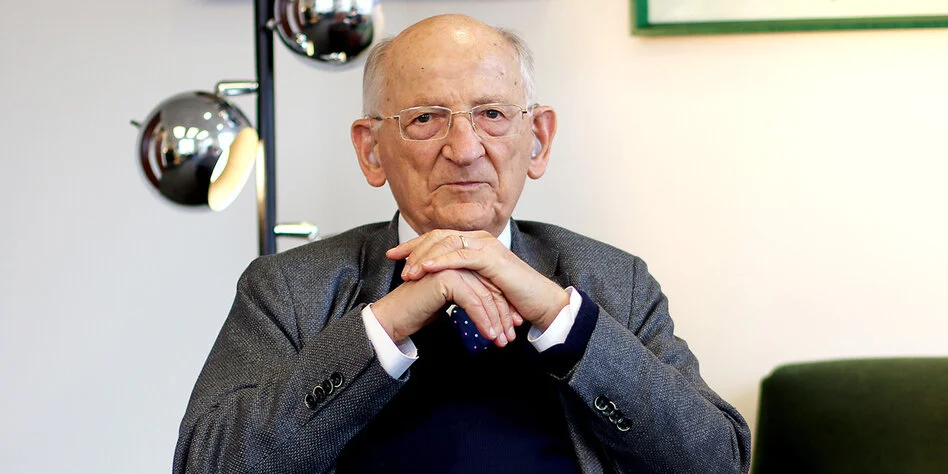
Otto Kernberg in his turn described what this looks like when it functions well, and his account contains an observation I return to often. Stable self-esteem, he argued, is not something we generate on our own. It is built out of the internalised presence of people who once loved us — their affection preserved as something like an inner climate, available even when they are not in the room. When that structure is intact, you can absorb criticism without crumbling, and accept warmth without needing to test it.
This means that, at its most basic level, self-esteem is a relational achievement rather than a personal virtue. This is not the narrative that our culture presents about confidence, but I believe it to be a more accurate representation.
Two accounts of what goes wrong
Where the concept becomes clinically serious is at the far end of the range, and here two of the major theorists disagreed in a way that is worth understanding, because the disagreement is more illuminating than either position alone.
Heinz Kohut viewed the problem as a deficit. He thought that every child moves through a period of expansive grandiosity, characterised by a belief in their own magnificence and in the flawlessness of the adults around them. This is not a pathology, but rather a form of scaffolding. The child needs someone to reflect this belief back to them with enough warmth for it to gradually deflate into something more manageable. If this reflection is chronically absent, however, the grandiosity does not mature. Instead, it hardens, leaving the adult permanently dependent on others for validation.
Kernberg saw something harsher. In his account the inflated self is not arrested development but active construction — armour built by a child in response to caregivers who were cold, unreliable or hostile, and built specifically to contain a quantity of rage the child had no other way of managing. The grandiosity is not a stalled stage. It is a structure with something underneath it.
I don’t think we need to adjudicate between them, and clinically the two pictures often coexist. But both accounts converge on a point that gets lost when the word is used as an insult: whatever this is, it started as something that happened to a child who had no say in the matter.
That does not make the adult behaviour less damaging. People organised this way can be genuinely destructive to those closest to them, and I would not want anything I’ve written here to be read as a reason to stay somewhere harmful. But there is a difference between recognising damage and pretending the person causing it has no interior. What the clinical literature describes underneath the grandiosity is not enviable at all — an emptiness that has to be continuously refilled from outside, a self that cannot hold its own value for more than a few hours without external supply. That is an exhausting way to be alive.
The part I find most interesting
My own orientation is existential, and this is where I think something further opens up.
Heidegger’s account of human existence rests on the observation that we are never isolated units who subsequently make contact with the world. We are already in it, already implicated, already constituted by our involvement with others. If that is true, then extreme self-focus is not simply a character flaw. It is a distortion of the basic structure of being a person — a way of standing outside a web you are already inside.
And underneath the distortion sits something universal. Victor Frankl argued that the deepest human motivation is the drive toward meaning, and that when meaning fails we do not become neutral, we become empty. Some writers have suggested that narcissism functions precisely as a defence against that emptiness — a private mythology constructed to hold off the suspicion that one’s existence might not particularly matter.
I think that suspicion visits everyone. The difference is not that some people have it and others don’t. The difference is how rigidly a person has to defend against it, and whether they have anything to fall back on when the defence gives way.
Emmy van Deurzen has written that a degree of self-interest is woven through our biology, our psychology, our culture and our spiritual life — that it is simply part of the equipment, and that what matters is whether it stays in conversation with an awareness of the world’s claims on us. Self-regard that remains in that conversation is the thing that lets a person care for others without disappearing. Self-regard that loses the conversation becomes the thing we have learned to call by that flattened, weaponised name.

So when the word comes up now — and it comes up constantly — I notice I want to slow it down. Not to excuse anyone, and not to argue that the damage isn’t real. But because the concept, taken seriously, is not a category of person that other people belong to. It is a description of something we are all managing, with varying degrees of success, most of the time.
If you are dealing with the effects of a relationship organised around these dynamics, therapy can be a useful place to think it through. Nothing in this article is intended as diagnosis, whether of yourself or of anyone else.
Main image: Martin Parr, from the series Death by Selfie. © Martin Parr / Magnum Photos.