Some people come to therapy because something has clearly happened. A loss, a relationship falling apart, a period of burnout or depression, a decision they can no longer avoid. The reason is identifiable. The work has a shape from the start. Others come with something I recognise but that is harder to put clinical language around.
On the surface, life may be functioning well enough. Work is happening. Responsibilities are being met. Some might even describe them as successful or capable. But underneath all of that there is a more private kind of disturbance. This is a sense that the life they have built no longer connects to anything that feels real. ‘What is the point of this?’ as a genuine question they cannot answer and cannot stop asking.
I have sat with this question many times, in different forms, with different people. A crisis does not always announce itself loudly. It can arrive as a slow loss of direction, when that once mattered simply stop mattering, and no one can pinpoint exactly when this shift occurred. It can manifest as anxiety or depression. The person may have already tried to treat these conditions, and the treatment may have helped with the symptoms, but left the deeper issue untouched.

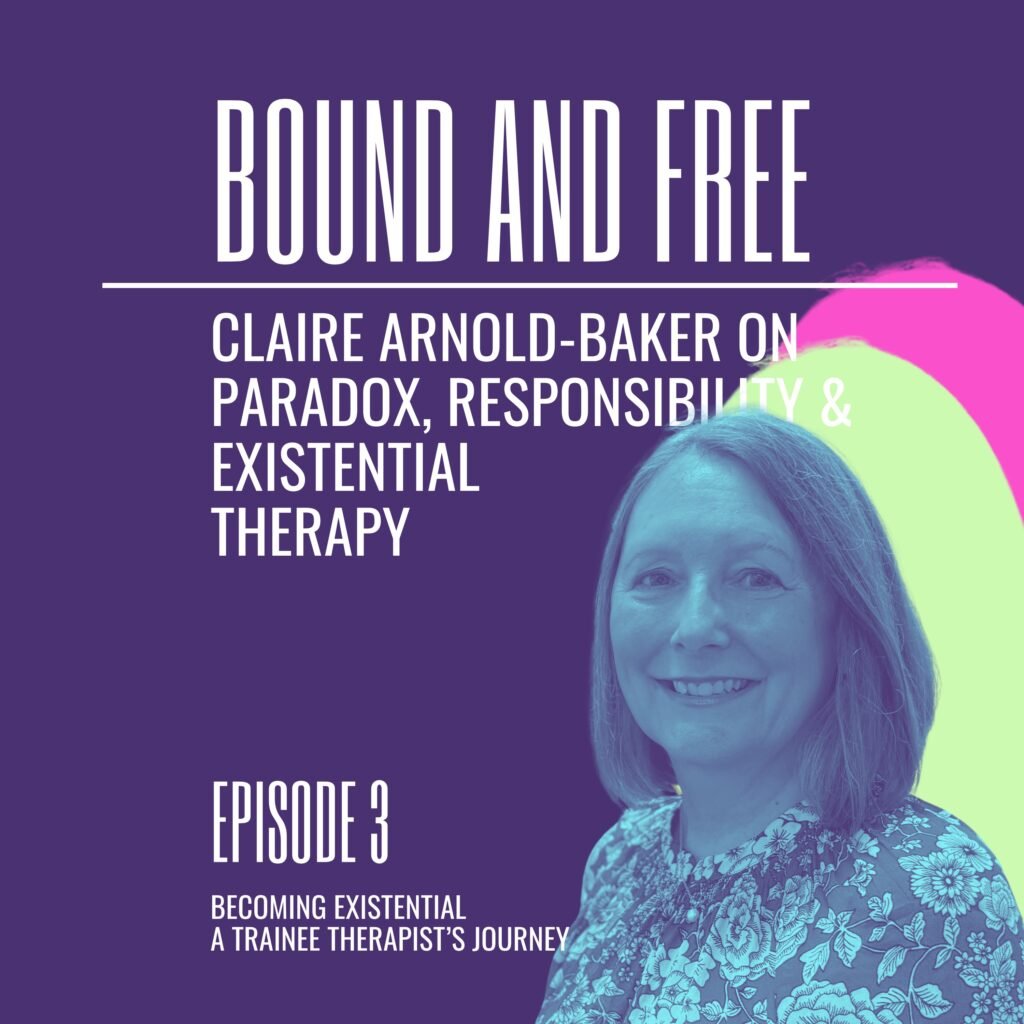
My training began in psychology, and I spent the better part of two decades in business before returning — to counselling, and eventually to existential therapy, where I am completing my clinical training at the NSPC and Middlesex University in London. I mention this because it shapes how I work. I have been in rooms where people perform competence while quietly falling apart. I know what it looks like when someone’s life is working on every visible metric and still feels hollow. That recognition is part of what I bring into the therapeutic space, alongside a grounding in person-centred, humanistic, cognitive-behavioural, and psychodynamic approaches that gives me a broad, integrative foundation to draw from.
But it was the existential approach that finally reached the questions I kept encountering — the ones that sit underneath the diagnostic categories, and that no amount of cognitive restructuring quite gets to. Not because those other modalities are wrong. Because some people are not suffering from a disorder. They are suffering from a question.
Existential psychotherapy takes that question seriously. It does not treat meaninglessness as a symptom to be corrected, or assuming that a person who is struggling to find their purpose is simply thinking about life in the wrong way. Sometimes people are seeing their situation with painful accuracy. The work is not to talk them out of what they see. It is to make enough room for them to be honest about it — and to discover, from inside that honesty, what still matters to them and what kind of life might be worth building.
The concerns that come up in this work are not abstract philosophical ones. They are immediate and practical. A person questioning whether the career they spent twenty years constructing actually reflects who they are. Someone recognising that a relationship has been sustained by habit rather than genuine connection. The loneliness of arriving at a crossroads where no one else can make the choice for you. The unsettling recognition that previous ways of coping — staying busy, staying successful, staying indispensable — have become more costly than the problems they were designed to avoid.

I pay close attention to what is already present but not yet fully acknowledged. People often describe their lives in one register while their body, their energy, their hesitations tell a different story. There may be abandoned creative work, ethical commitments that have gone underground, relationships that still carry weight despite being neglected. These do not always add up to a grand revelation. More often they emerge as tentative, partial signals — quiet indications of what a more honest life might involve.
I should be clear about something. Existential language can overstate individual freedom. People do not choose in a vacuum. Economic pressure, family history, trauma, cultural context, structural inequality — these things constrain what is genuinely available to a person, and a therapy that ignores them in favour of philosophical abstraction is not a serious therapy. I hold the existential framework because I find it reaches further than the alternatives, not because I think freedom is the whole story.
What I am offering is not a ready-made purpose. Meaning cannot be given to someone from the outside — I have tried, earlier in my training, and it does not work. I am providing a space where the hardest questions do not have to be softened or resolved prematurely. The space where you can speak honestly about the gap between the life you are living and the life you sense might be possible. To speak without being pathologised for noticing this gap.
From there, something begins to shift. Not always dramatically. Often it looks like a person gradually reorienting — finding their way back to concerns and commitments and relationships that carry genuine weight, even where certainty is not available. A renewed sense of aliveness, sometimes experienced for the first time, sometimes recovered after a long absence.
That is what the work aims toward. Not answers. A more honest way of living with the questions.